


1. Construction Projects Depend on Skilled Labour
Construction and interior design projects require multiple skilled professionals such as:
- Masons
- Carpenters
- Electricians
- Plumbers
- Painters
- Interior installers
Each of these workers plays a crucial role in project execution. If labour is not available or properly coordinated, the entire project timeline can collapse.
This makes labour management in construction one of the most critical functions for contractors and builders.
2. Labour Productivity Directly Affects Profitability
In most construction projects, labour costs account for 30% to 50% of the total project cost.
Poor labour productivity can cause:
- Budget overruns
- Extended project timelines
- Reduced contractor profitability
By using construction workforce management software, companies can:
- Track worker attendance
- Monitor daily productivity
- Allocate labour efficiently
- Reduce idle time
These improvements directly increase construction business profitability.
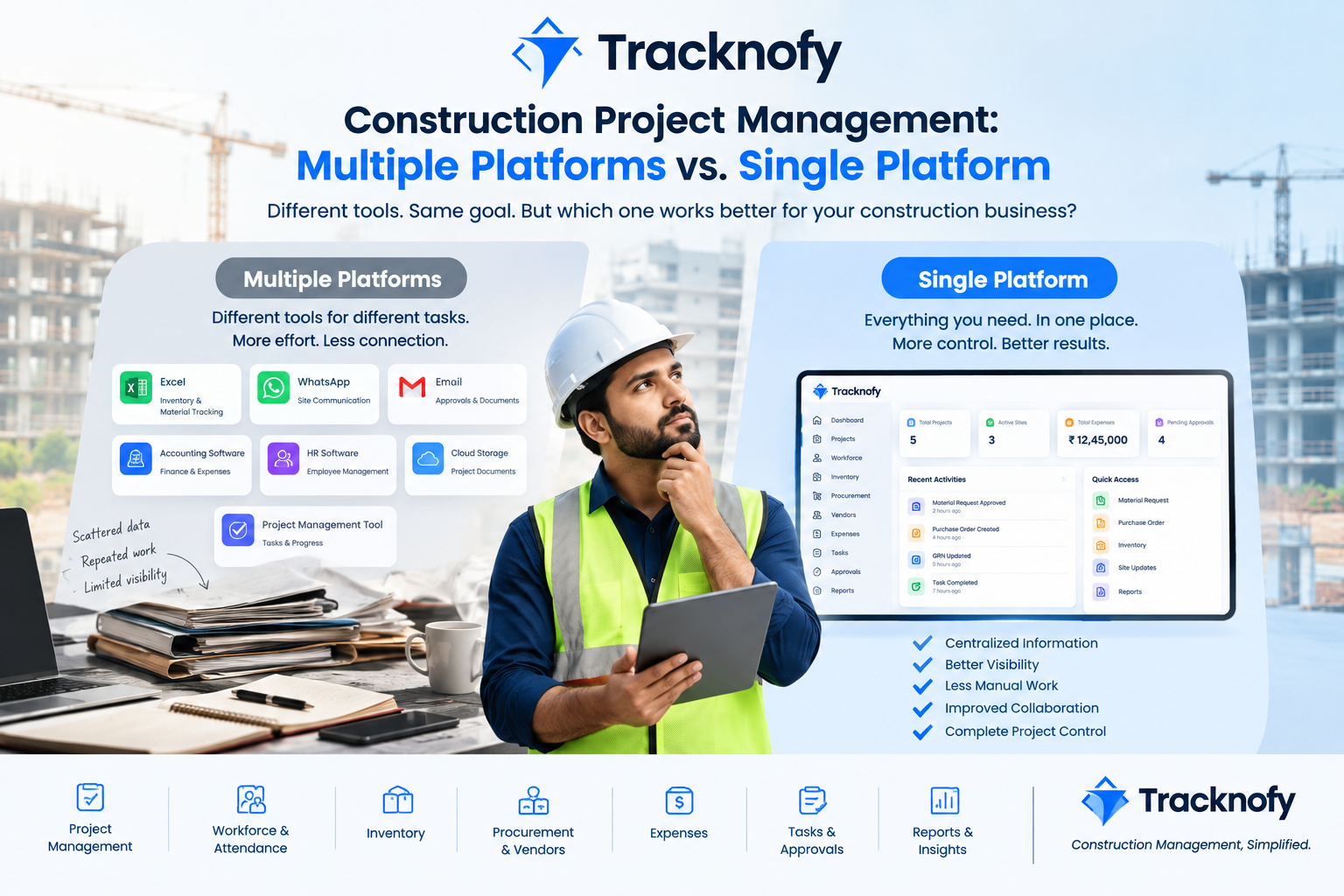
3. Managing Workforce Across Multiple Sites is Challenging
Most construction companies handle multiple projects simultaneously. Workers may move between sites depending on project requirements.
Manual systems such as:
- Attendance registers
- WhatsApp coordination
- Phone calls
often lead to:
- Worker shortages on site
- Attendance manipulation
- Communication gaps
- Poor task tracking
Using a construction management tool or construction ERP system, contractors can:
- Monitor workforce across multiple sites
- Track labour attendance in real time
- Allocate teams efficiently
- Improve site communication
This brings complete visibility to project workforce operations.
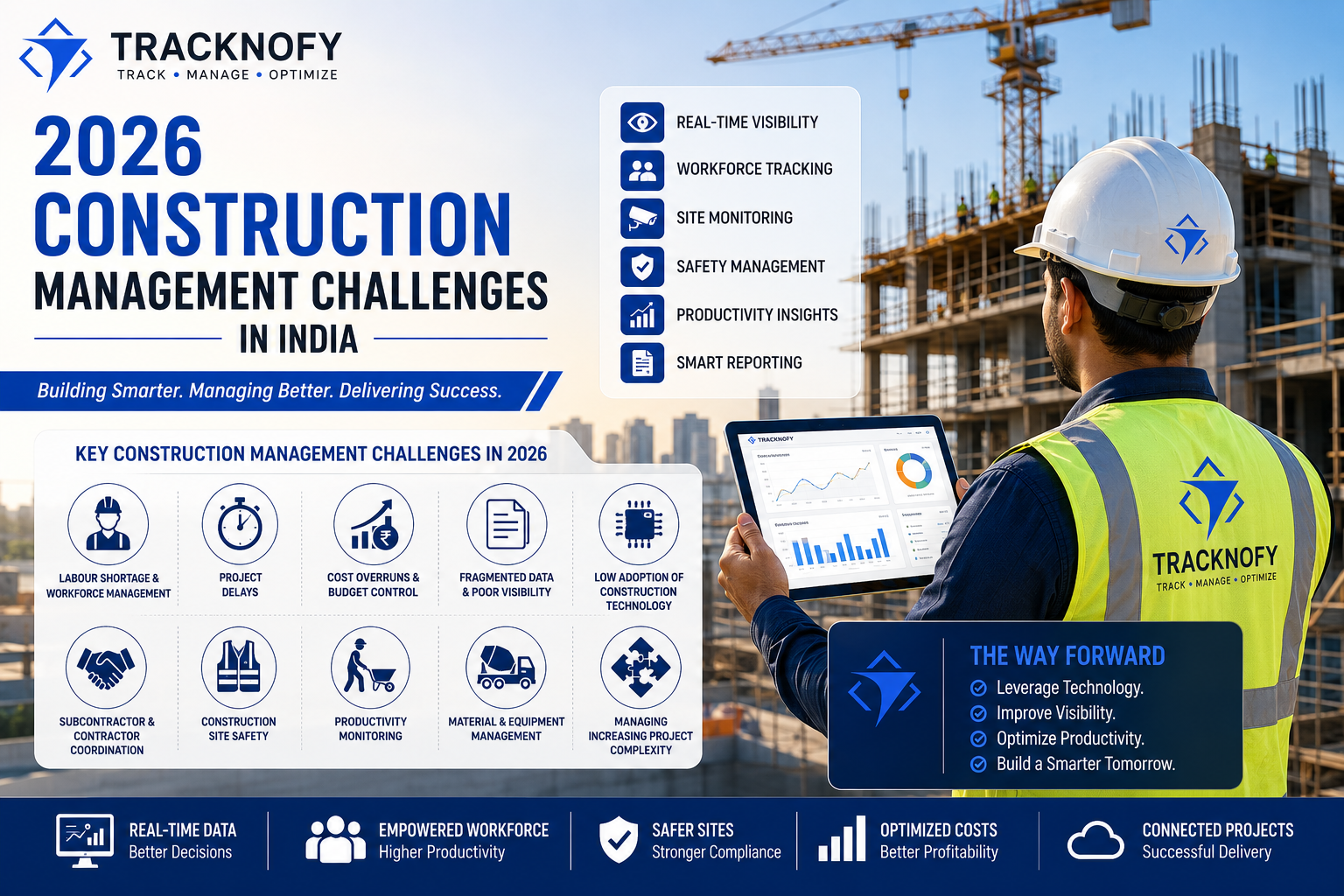
Common Workforce Management Challenges in Construction
Despite its importance, many construction companies still struggle with workforce management.
Some of the most common challenges include:
Lack of Real-Time Workforce Visibility
Site managers often do not have accurate data about:
- How many workers are present
- What tasks they are performing
- Whether productivity targets are met
This lack of visibility leads to poor decision-making.
Labour Attendance Issues
Manual attendance systems are prone to errors such as:
- Proxy attendance
- Incorrect labour records
- Time tracking issues
A digital construction workforce management system solves this problem by maintaining accurate attendance data.
Communication Gaps Between Teams
Construction projects involve multiple teams working simultaneously.
Without a centralized system, communication issues arise between:
- Project managers
- Site supervisors
- Labour teams
This often leads to delays and rework.
Inefficient Labour Allocation
Sometimes workers remain idle while other sites face labour shortages.
A centralized construction ERP platform helps companies allocate workforce efficiently across projects.
How Construction ERP Improves Workforce Management
The adoption of Construction ERP software has transformed how contractors manage their workforce.
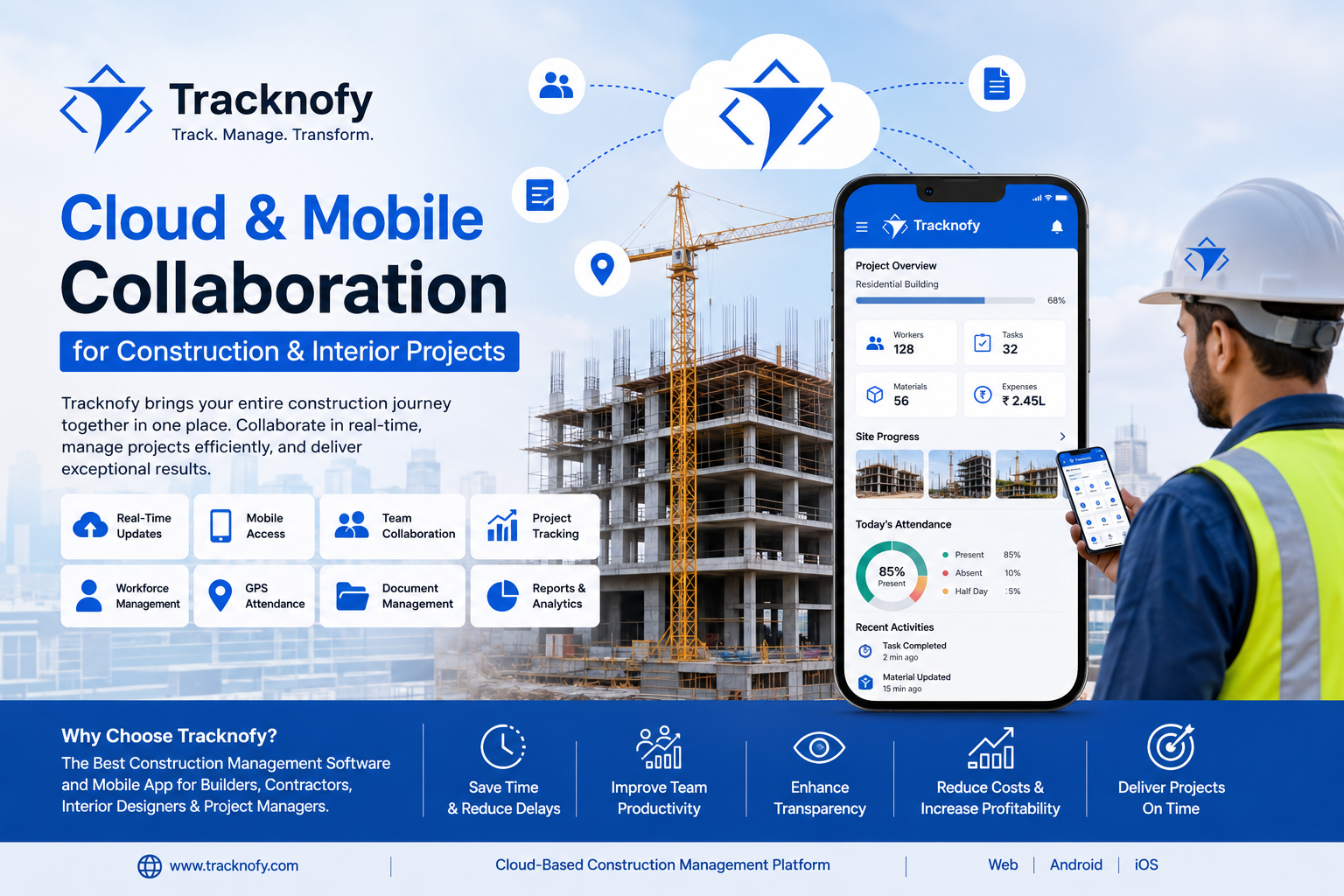
Modern construction management platforms offer features such as:
Labour Attendance Tracking
Track workforce attendance across multiple sites in real time.
Workforce Productivity Monitoring
Measure how efficiently teams complete tasks.
Task Assignment
Assign work to supervisors and labour teams based on project requirements.
Multi-Site Workforce Management
Manage workers across different construction projects from a centralized dashboard.
Performance Analytics
Analyze workforce productivity and identify improvement opportunities.
These capabilities help contractors optimize workforce efficiency and improve project delivery timelines.
Importance of Workforce Management in Interior Design Projects
Workforce management is equally critical in interior design and fit-out projects.
Interior projects require coordination between multiple specialists such as:
- Modular kitchen installers
- Furniture fabricators
- False ceiling technicians
- Lighting installers
- Decor specialists
These tasks are often sequence dependent, meaning delays in one activity affect the entire project schedule.
A construction management tool designed for interior businesses ensures that:
- Teams arrive on site at the right time
- Tasks are completed in the correct order
- Skilled labour is properly allocated
This results in faster project delivery and improved client satisfaction.
Digital Transformation in Construction Workforce Management
The construction industry is rapidly adopting ConTech solutions to improve efficiency.
Digital tools now enable:
- Real-time workforce tracking
- Automated attendance systems
- Workforce productivity analytics
- Site activity monitoring
- Project progress tracking
Companies that adopt construction technology platforms gain a competitive advantage by reducing delays and improving operational efficiency.
How Tracknofy™ Helps Manage Workforce in Construction
Tracknofy™ | Construction ERP is built specifically for contractors, builders, and interior design companies.
It provides a complete platform for managing construction projects, teams, and workforce operations.
With Tracknofy™, businesses can:
- Track labour attendance across multiple sites
- Monitor workforce productivity
- Assign tasks to teams and supervisors
- Manage workforce allocation efficiently
- Reduce delays caused by labour mismanagement
Tracknofy helps construction companies improve project efficiency and workforce productivity using modern Construction Tech solutions.
The Future of Workforce Management in Construction
The future of construction workforce management will be driven by data, automation, and AI-powered insights.
Technologies that will shape the future include:
- Construction ERP platforms
- AI-driven workforce analytics
- Mobile workforce management apps
- Smart site monitoring tools
- Integrated project management systems
These innovations will help construction companies deliver projects faster, reduce costs, and improve operational efficiency.
Conclusion
In construction and interior design businesses, people build projects — not machines.
A strong workforce ensures:
- Faster project completion
- Higher quality work
- Better cost control
- Improved customer satisfaction
By adopting modern construction workforce management systems and construction ERP platforms, companies can unlock the full potential of their teams and achieve consistent project success.
For construction businesses looking to grow and scale efficiently, effective workforce management is no longer optional — it is essential.